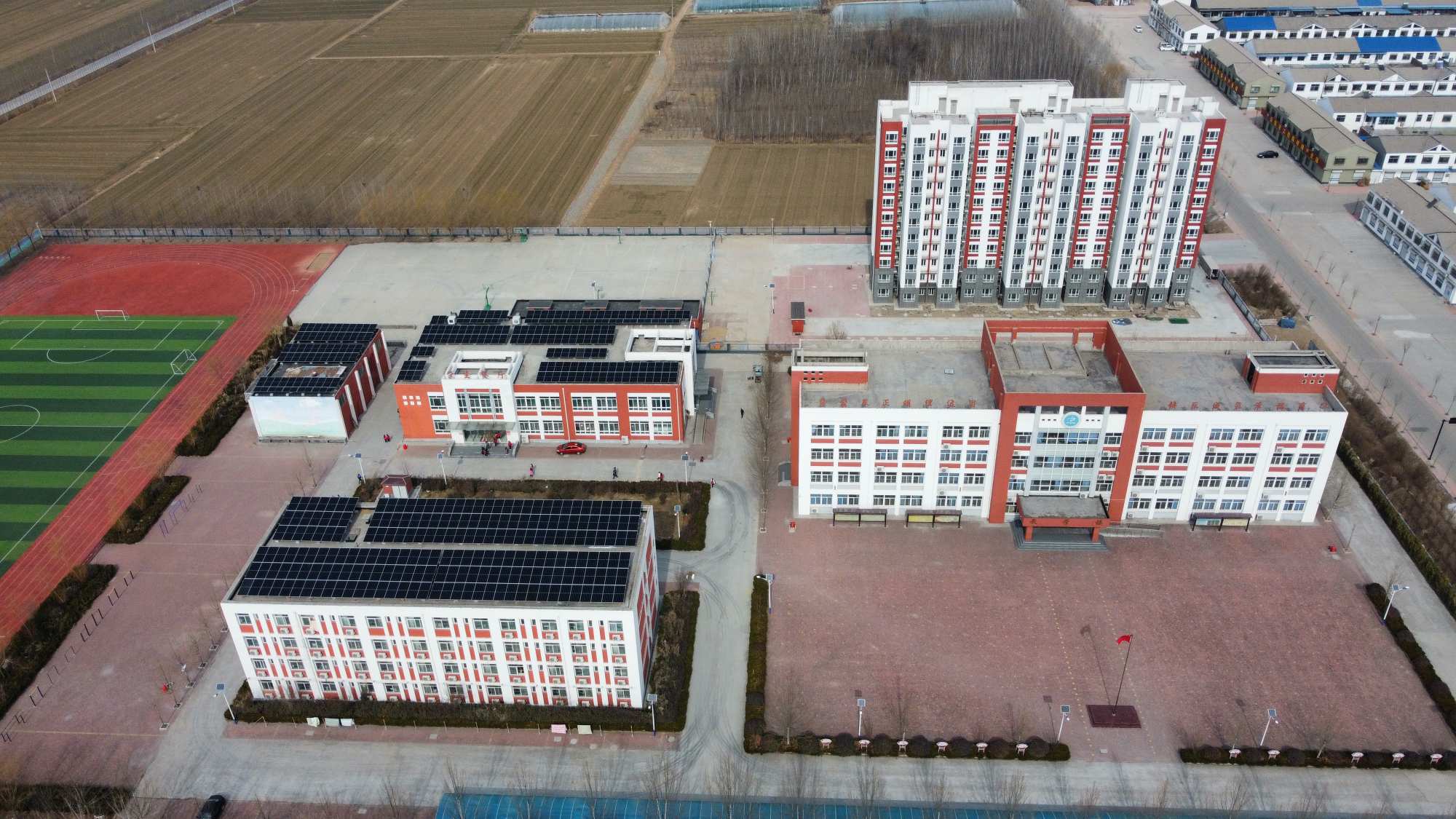
Shandong Shenghe Electric Power Engineering Design Co., Ltd.: From Single Power Plants to Integrated Systems—Charting the Future of Distributed Energy
For a long time, the phrase "distributed photovoltaics" has been synonymous with rooftop solar panels. But that era is ending. Today, in Shandong—China's largest distributed PV province—a deeper transformation is quietly taking shape. Distributed PV is no longer a "loner" generating electricity in isolation; it is evolving into the cornerstone of industrial green microgrids, zero-carbon parks, and even virtual power plants that connect millions of households to the market. As a professional engineering firm deeply rooted in Shandong, Shandong Shenghe Electric Power Engineering Design Co., Ltd. is not merely building power stations—it is helping clients build the energy system of the future.
Part One: The New Rules of the Game—From Supplementary Power to Grid Pillar
Shandong Shenghe Electric Power Engineering Design Co., Ltd. has keenly observed that the role of distributed PV in the power system is undergoing a fundamental shift. Once a minor supplement to the grid, it is now a core pillar of the new power system.
As early as January 2026, Shandong Province took the lead in achieving full market-based settlement for new energy, sounding the starting gun for the transformation of distributed PV from "fixed subsidy dependence" to "market competition." According to data released by Shandong's energy authorities, as of the end of 2025, the province's grid-connected PV installed capacity had reached 93.44 million kilowatts, with distributed PV accounting for 60.33 million kilowatts, a year-on-year increase of 20.25%. As the nationwide leader in installed capacity, Shandong's market-oriented path has set the trend for the entire nation.
In this context, Shandong Shenghe's technical team has established a clear strategic judgment: future distributed PV projects will no longer focus solely on "how many kilowatts are installed," but on "when the power is generated, how it is consumed, and at what price it is traded." This shift has elevated the company's professional capabilities from a single design dimension to the all-around "technology + market + operations" support system that clients truly need.
Part Two: The "Source-Grid-Load-Storage" Era—From Generating Electricity to Managing Energy
One of the most critical trends is the rise of industrial green microgrids. According to the "Industrial Green Microgrid Construction and Application Guide (2026–2030)" jointly issued by five national ministries including the Ministry of Industry and Information Technology, industrial green microgrids are comprehensive energy systems that integrate photovoltaic, wind power, new energy storage, smart energy management, and other technologies. The guide explicitly requires that new renewable energy generation in industrial enterprises and parks achieve a self-consumption rate of no less than 60% annually, and in areas with continuous spot market operation, distributed PV may be aggregated to participate in spot markets.
These policy directions align perfectly with Shandong Shenghe's technical roadmap. The company has moved beyond the traditional role of a "photovoltaic system designer" to become an "energy system integrator." In its current designs, "PV + smart energy storage" has become the standard configuration, with the intelligent Energy Management System (EMS) serving as the "brain" that coordinates generation and consumption.
Take the Fushan Source-Grid-Load-Storage Integration and Multi-Energy Complementary Demonstration Project in Yantai, for example—a project fully aligned with Shandong Shenghe's strategic direction. The project includes 10.66MW of new commercial and industrial distributed rooftop PV, along with 5.04MW/10.08MWh of commercial and industrial energy storage, combined with air-source and water-source heat pump heating systems to achieve a "one-machine-multiple-use" multi-energy complementary approach. In this system, distributed PV is no longer isolated generation equipment but a key node within a larger energy ecosystem.
In the Jinan Gangcheng project at the Shandong Iron and Steel Co., Ltd. facility, the 88.43MWp distributed PV system planned by the developer is not merely a power generation facility—it is integrated into the entire plant's power supply architecture, with system design requiring comprehensive consideration of power quality, protection coordination, and grid interaction. This project serves as a vivid example of how distributed PV is being deeply integrated into industrial production processes.
Part Three: Virtual Power Plants—Unleashing the "Hidden Champion" of Distributed Resources
If microgrids are the "cells" of distributed energy, then virtual power plants (VPPs) are the "central nervous system" that connects these cells. In a province like Shandong, with over 1.36 million distributed PV households, how can these decentralized small-scale power sources be organized to serve the grid and create value for their owners? Shandong Shenghe has found the answer: aggregation.
The latest data shows that as of the end of February 2026, Shandong had already built 44 virtual power plants, with a total regulation capacity exceeding one million kilowatts. In a centralized dispatch call in December 2025, these VPPs released 634,000 kilowatts of regulation capacity, equivalent to the generation power of 30,000 household PV systems. According to the Shandong Province Virtual Power Plant High-Quality Development Plan released on March 27, 2026, VPP regulation capacity is expected to exceed 1.5 million kilowatts by the end of this year.
Shandong Shenghe Electric Power Engineering Design Co., Ltd. has been actively involved in this transformation. The company's design team has established a mature "VPP-ready" design process that ensures every distributed PV project, whether new or existing, can seamlessly integrate into a VPP at any time. The plan specifies that distributed PV can be aggregated through generation aggregation units to participate in spot markets.
"Through virtual power plants, what was once scattered and hard-to-coordinate green electricity is now being effectively aggregated, releasing greater value in broader markets," as a typical description of the Taian VPP pilot noted. Shandong Shenghe is actively collaborating with several VPP operators, leveraging the company's design expertise and extensive network of client resources to provide a steady stream of high-quality, regulation-friendly distributed resources for the VPP market.
Part Four: From Projects to Ecosystems—The Commercial Logic of Zero-Carbon Parks
A higher-level integration is the construction of zero-carbon parks. The newly issued "Shandong Province 2026 New Energy High-Level Consumption Action Plan" explicitly calls for accelerating the construction of 10 green electricity industrial parks, including Yantai Wanhua, and 20 zero-carbon parks, including the Dingzi Bay New Energy Innovation Zone, to achieve integrated development of new energy and industry. The plan also supports the "integrated PV-storage" project filing for new distributed PV projects and actively promotes the Source-Grid-Load-Storage Integration model.
As a professional power engineering design firm, Shandong Shenghe views zero-carbon parks as not just technical projects but as complex business ecosystem designs. The core logic of a zero-carbon park lies in maximizing the value of green electricity across the dimensions of time, space, and load. For instance, rooftop PV generates power during the day; energy storage shifts midday low-price power to the evening peak; electric vehicle charging piles serve as both loads and flexible regulation resources; and the smart EMS optimizes dispatch across all of them.
In its consulting services for zero-carbon park designs, Shandong Shenghe adheres to three core principles: maximizing renewable energy penetration, ensuring grid-friendly interaction, and achieving economic viability. The company's technical team, leveraging years of accumulated experience, can provide comprehensive consultation from policy interpretation to technical path selection to business model design.
Conclusion: Becoming a "Whole-Lifecycle Energy Partner"
From single power plants to integrated systems, from fixed subsidies to market-based trading, from isolated generation to virtual power plants and zero-carbon parks—the evolution of distributed PV mirrors the advancement of China's energy transition. Shandong Shenghe Electric Power Engineering Design Co., Ltd. is not just a participant in this transformation but a practitioner and driver of it.
The company is transitioning from a "design and EPC contractor" to a "whole-lifecycle energy partner." This means Shandong Shenghe not only helps clients build power stations but also helps them make money from electricity in the market, optimize operations with data, and preserve asset value with foresight.
In 2026, distributed PV in Shandong stands at a new starting line. Those who truly understand the rules will emerge as winners, and those who build true system capabilities will stand at the forefront of the tide. Shandong Shenghe Electric Power Engineering Design Co., Ltd. will continue to deepen its efforts, accompanying more clients on the journey toward a cleaner, smarter, and more efficient energy future.